John the Baptist
John the Baptist was a great man.
Jesus said of John, Among those born of women there has not
risen anyone greater than John the Baptist (Matthew 11:11).
John was great because he saw his proper relationship to Jesus
Christ. He said of Jesus, He must become greater; I must become less (John
3:30). He must increase; I must decrease.
Johns ministry came at the end of the Old Testament and the
beginning of the New. Prophets had been silent for 400 years in Israel. John appeared on
the scene dressed like the prophet Elijah.
Why was John the Baptist so important that each of the Gospels begin
the ministry of Jesus with Johns preaching? According to Malachi and Isaiah a
forerunner would come preparing the way for the Messiah (Mal. 3:1; 4:5-6; Isa. 40:3). John
was that man.
His message was strong and powerful. “Repent, for
the kingdom of heaven has come near” (Matt. 3:2). John demanded a
radical change in people’s lives as preparation for the coming of the
Messiah. The Greek word for “repent” means to change one’s thinking, or
to turn about. It is a change in a person’s attitude toward God and in
the conduct of life. It was a call to a radical transformation of the
entire person. It is a change in mind that results in a change in a
person's attitudes and behavior.
The basic assumption is that we need to repent because our lives need
to be turned around. We are sinners who have come short of Gods glory
(Rom. 3:23). We are
walking in sin and selfishness and we need a radical change in the way we view ourselves
and God. We need to be turned around so we go in the direction of the Lord Jesus Christ.
God demands that this change takes place in our lives.
Why is this change so critical to our way of life? The kingdom
of heaven is at hand (Matt. 3:2). The Messianic King has come!
Even a casual reading of the Gospels reveals that Matthew uses
kingdom of heaven instead of kingdom of God. Matthew was writing
to Jews who often substituted the word heaven for the word God
which out of superstition they refused to pronounce.
Johns message concerns the reign or rule of God as sovereign
over His creation. But it is also the place where God rules in the lives of His redeemed
people. He expects His subjects to live as members of His kingdom.
The kingdom of heaven or God is at hand because Jesus Christ is the
King of kings. The coming of the Messiah King meant that God would judge the earth and
bless His people. The final judgment will occur when Jesus returns. But even now He judges
because His presence forces individuals to choose to submit to His rule over their lives
or to refuse to submit to His rule.
The only person who can bring about this radical change we so
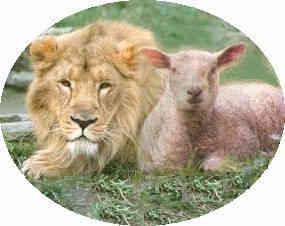
desperately need is, The lamb of God who takes away the sin of the world (John
1:29, 36). The substitutionary death of Jesus perfectly fulfilled all the sacrifices
foreshadowed in the Old Testament.
By submitting to the baptism of John, Jesus was identifying Himself
with sinners so that he could one day lay down His life for sinners. Jesus was obedient
unto death as our substitute on the cross. He died for our sins.
We submit to baptism as believers in Christ, not in order to be
saved, but to identify ourselves with the death and resurrection of Jesus Christ. Baptism
is a symbol of our being buried in His death and raised in His resurrection. We are
identified in His death and His resurrection so that His death becomes our death and His
resurrection is our resurrection. Jesus so identified with us so that in our humanity He
could die for our sins. The wages of sin is death, however He was not dying
for His own sins, but ours. The lamb of God takes away the sin of the world.
Have you so identified yourself with Jesus Christ? Have you turned
your life over to Him? Have you experienced the radical change that Jesus brings to
sinners who repent of their sins and trust in Him as their Savior?
Selah!
Message by Wil Pounds (c) 2006
Click for printer friendly page
SELAH INDEX
CLICK to E-mail SELAH! to a friend.
|